The New Rolex Yacht-Master II Feels Surprisingly Different
When Rolex first introduced the Yacht-Master II back in 2007, the watch felt almost strange in the best possible way. It wasn’t just another variation of the original Yacht-Master from the early ’90s. Instead, Rolex built an entirely new regatta-focused chronograph around one unusual idea: programming the countdown through the bezel itself.
At the time, the Ring Command system genuinely felt futuristic. Clever too. Maybe a little too clever, honestly.
For years, the Yacht-Master II developed a reputation as one of Rolex’s most technically ambitious modern sports watches, even if many collectors quietly admitted they never fully understood how to use it. Still, that complexity became part of its personality.
Now things have changed.
Rolex Simplifies the Yacht-Master II
The biggest update to the new Yacht-Master II is easy to spot once you understand how the old system worked. The programmable countdown timer no longer relies on the Ring Command bezel. Instead, Rolex moved those controls directly to the pushers.
That sounds like a small adjustment. It really isn’t.
The bezel itself now behaves more like a conventional bidirectional timing bezel with a 60-minute scale. Cleaner. Simpler. Probably more approachable for people who admired the Yacht-Master II from a distance but never wanted to learn its quirks.
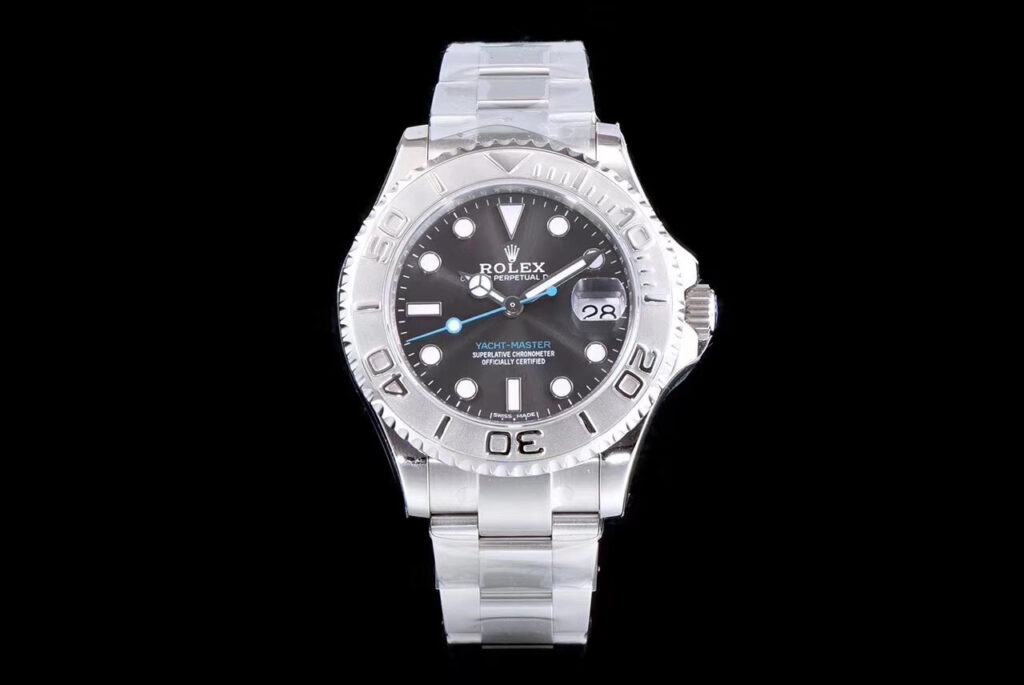
The lower pusher now handles countdown programming. Each press advances the minute hand step by step, allowing the wearer to align the countdown directly against the minute markers. Once programmed, the watch remembers the sequence mechanically, so restarting the same timing procedure becomes much easier during repeated race starts.
And honestly, that mechanical memory function is still one of the coolest parts of the whole watch.
Rolex explains in its official technical materials that the revised system was designed to improve usability while maintaining the regatta-specific functionality that defined the Yacht-Master II from the beginning. That balance probably mattered more than reinventing the watch visually.
A Cleaner, Quieter Dial
Visually, the updated Yacht-Master II feels calmer than the previous generation.
The matte white lacquer dial reduces reflections nicely, but the bigger difference comes from the redesigned countdown display. Rolex moved the timing scale onto the flange instead of placing it directly on the dial surface. It sounds subtle on paper. On the wrist, though, it noticeably declutters the watch.
Oddly enough, the new layout makes the Yacht-Master II feel slightly closer to the standard Yacht-Master family than before.
Some collectors will probably appreciate that. Others may miss the loud, almost oversized personality of the original version.
The central chronograph seconds hand and countdown minute hand both rotate counterclockwise, which Rolex says better reflects the nature of a countdown. It’s one of those tiny details enthusiasts tend to obsess over.
Still Big. Very Big.
I genuinely thought Rolex might shrink the case this time around.
The Yacht-Master II remains a 44mm watch with a 13.9mm thickness, available in Oystersteel or 18K yellow gold. Water resistance stays at 100 meters, and the watch still wears with the kind of physical presence you either enjoy or immediately reject.
There’s really no middle ground here.
For some wrists, it’ll feel fantastic. For others, especially collectors drifting back toward slimmer 38–40mm watches lately, this thing may simply feel enormous.
That said, Rolex rarely redesigns a model around trends alone. The Yacht-Master II has always been slightly theatrical, and shrinking it too much might’ve removed part of its identity.
Caliber 4162 Brings Modern Rolex Architecture
Inside the watch sits the new caliber 4162 automatic chronograph movement.
Like you’d expect from modern Rolex calibers, it uses a column wheel, vertical clutch architecture, and the Chronergy escapement. Rolex claims approximately 72 hours of power reserve, which has quietly become the brand’s modern standard across much of the Professional collection.
Here’s a quick overview:
| Specification | Rolex Yacht-Master II |
|---|---|
| Case Size | 44mm |
| Thickness | 13.9mm |
| Water Resistance | 100m |
| Movement | Caliber 4162 |
| Power Reserve | Approx. 72 hours |
| Functions | Programmable regatta countdown chronograph |
| Bracelet | Oyster bracelet with Easylink |
The Oyster bracelet remains excellent, of course. Rolex bracelets rarely get enough credit because people almost expect them to be good at this point.
Rolex Day-Date Alternatives Still Have Their Own Appeal
Interestingly, the conversation around the Yacht-Master II naturally leads into another topic collectors constantly debate: alternatives to Rolex icons.
And maybe no Rolex model inspires that discussion more than the Day-Date.
The Day-Date occupies a strange place in watch culture. It’s luxurious, recognizable, slightly conservative, and deeply tied to the idea of success. Plenty of watches offer day-date complications. Very few capture the same aura.
Still, a handful come surprisingly close.
Tudor Royal 41mm
The Tudor Royal is probably the most obvious starting point.
Not because it copies the Day-Date directly, but because it channels some familiar Rolex DNA without pretending to be something it isn’t. The integrated bracelet, notched bezel, and overall profile immediately bring old Oysterquartz references to mind. That’s intentional.
The 41mm version is the important one here because it’s the only Royal model that actually includes both day and date displays.
| Specification | Tudor Royal 41mm |
|---|---|
| Case Size | 41mm |
| Thickness | 10.6mm |
| Movement | Tudor T603 |
| Power Reserve | 38 hours |
| Starting Price | €2,940 |
For the money, it’s hard not to understand the appeal. Sure, nobody’s confusing it with a precious-metal Day-Date. But that’s not really the point.
Patek Philippe Cubitus Grand Date Ref. 5822P-001
Now this one is controversial.
The Cubitus collection triggered strong reactions almost immediately after launch, and honestly, I still understand why. Some people love the unusual geometry. Others think it feels awkward compared to the Nautilus.
Probably both sides have a point.
Still, the Grand Date version deserves attention because of its functionality and presence. The watch combines a large date display, day indication, moon phase, and running seconds within a surprisingly slim platinum case.
The asymmetrical sub-dial layout remains divisive. Yet if you know Patek history well, the design language isn’t nearly as random as critics sometimes suggest.
At €91,900, though, this is obviously operating in a completely different universe from the Tudor.
A. Lange & Söhne Odysseus
For many enthusiasts, the Odysseus may actually be the strongest luxury sports watch alternative to the Day-Date overall.
Not stylistically. Emotionally.
There’s a seriousness to Lange finishing that photographs still struggle to capture properly. The outsize date, beautifully integrated day display, textured dial work, and remarkable bracelet finishing all give the watch enormous presence without screaming for attention.
And then there’s the movement.
The L155.1 Datomatic caliber is one of those mechanisms that reminds you why German watchmaking has such devoted followers. German silver plates, hand engraving, platinum rotor weight — it’s incredibly detailed without feeling decorative for the sake of it.
The bracelet adjustment system is excellent too. Small detail, huge difference in daily wear.
TAG Heuer Carrera Day-Date
This might actually be the sleeper pick on the list.
The modern Carrera Day-Date doesn’t receive nearly as much attention as the chronograph models, but for everyday use, there’s an argument that it’s the more practical watch. Comfortable sizing, clean dials, strong movement specs, and pricing that remains relatively accessible by modern Swiss standards.
| Specification | TAG Heuer Carrera Day-Date |
|---|---|
| Case Size | 41mm |
| Thickness | 12.57mm |
| Movement | TH31-02 |
| Power Reserve | 80 hours |
| Price Range | €3,990–€8,950 |
The 80-hour reserve is particularly impressive at this level.
And honestly, some buyers probably prefer the cleaner look of the Day-Date over a busier Carrera chronograph.
Seiko 5 Sports SNXS Series
Not everybody shopping for a day-date watch wants to spend luxury-watch money.
That’s where the Seiko SNXS series becomes interesting.
These watches obviously aren’t competing directly against Rolex in terms of finishing or prestige. But the compact sizing, comfortable bracelet, practical day-date display, and slightly vintage styling make them genuinely charming daily wearers.
The subtle “President bracelet” vibes don’t hurt either.
At roughly €400, they occupy a completely different category financially, yet they still deliver something many expensive watches forget: easy, enjoyable wearability.
Finding true alternatives to the Rolex Day-Date is harder than it sounds.
Most watches can copy the complication. Very few capture the same mix of authority, luxury, comfort, and recognizability. That’s why the Day-Date has remained relevant for decades, even as trends shift toward sportier or more casual watches.
At the same time, some collectors may actually prefer the individuality of these alternatives. A Lange Odysseus says something very different from a yellow-gold Day-Date. So does a steel Tudor Royal or even a humble Seiko SNXS.
And that’s probably the interesting part of the current watch market. Collectors today seem much more willing to mix prestige with personality rather than chase one universally accepted “best” option.
The new Yacht-Master II reflects that too, in a strange way. Rolex simplified the watch, refined the design, and made it easier to live with — but it still remains unmistakably itself. Not every modern luxury watch manages to do that.