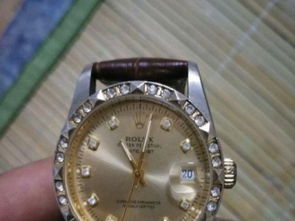
Copy Rolex for Sale and the Questions a Watch Listing May Leave Unanswered
The advertisement looks promising until the buyer reaches the description.
“Rolex Datejust 41. Custom dial. Aftermarket bezel. Swiss automatic movement. Excellent condition.”
Every phrase appears to describe something tangible. The seller has identified a recognizable model, disclosed modifications, and mentioned the movement. There are photographs of the dial, bracelet, and case, along with a price that seems reasonable for a watch containing replacement components. 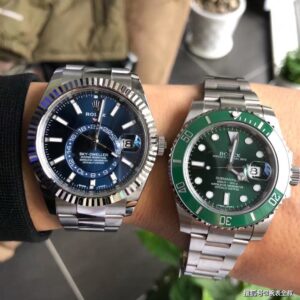
Yet the description leaves out the most important information of all: what exactly is being sold?
It could be a genuine Rolex Datejust modified with non-Rolex components. It could be a watch assembled from a mixture of genuine and aftermarket parts. It might be an entirely unauthorized imitation with a Rolex-branded dial and no components manufactured by Rolex.
Those are materially different products, even if their outward appearance is similar.
The advertisement above is a hypothetical example, not a quotation from an actual seller. Its ambiguity illustrates a recurring problem in the watch market: individual components can be described accurately while the identity of the complete watch remains uncertain.
For someone encountering a copy Rolex for sale, the distinction matters more than the quality of the photographs or the number of technical specifications provided.
A watch is not necessarily what its most expensive component suggests it is.
The First Question Is About Identity, Not Condition
A buyer accustomed to purchasing pre-owned watches might begin by looking for scratches, polishing, bracelet stretch, or signs of moisture damage.
Those details are relevant when the identity of the product is already established. They become secondary when the seller has not clearly explained whether the watch itself was manufactured by Rolex.
Consider the hypothetical Datejust listing.
The phrase custom dial may indicate that a genuine Rolex dial was modified, that a non-Rolex dial was installed in an authentic watch, or that the entire watch was assembled using unauthorized components. Without further explanation, the term does not establish which interpretation is correct.
Aftermarket bezel is similarly incomplete. It describes a component that may have been manufactured independently of Rolex, but it says nothing conclusive about the case or movement beneath it.
Swiss automatic movement is another ambiguous expression. A genuine Swiss-made movement from an independent manufacturer would not transform an unauthorized Rolex imitation into a genuine Rolex. Conversely, an authentic Rolex with a replacement dial does not automatically become a wholly counterfeit watch.
The central issue is that component descriptions and product identity answer different questions.
A movement can have a legitimate manufacturer, a bracelet can be made from the advertised material, and a dial can be accurately described as aftermarket. None of those statements establishes that the complete watch is an authentic Rolex.
This is why the wording of a listing deserves as much attention as the watch’s visible condition.
A seller who uses copy, custom, aftermarket, genuine, and original interchangeably may be obscuring distinctions that materially affect the buyer’s understanding.
The terminology itself is not proof of deliberate deception. Sellers may use these words imprecisely or misunderstand their technical implications.
Nevertheless, the ambiguity remains consequential.
Before assessing whether the price is attractive, the buyer needs to know what category of product the price is supposed to represent.
The Watchmaker Finds Something the Advertisement Did Not Explain
Imagine that the hypothetical watch is taken to an independent specialist for examination before the transaction is completed.
The dial looks convincingly like a modern Datejust. The case is well finished, and the bracelet feels substantial. The watch runs normally.
Then the caseback is opened.
Inside is an automatic movement that is not a Rolex caliber. The seller’s description of a Swiss automatic movement may still be accurate if the movement’s origin can be established, but the watch cannot be treated as a standard genuine Datejust merely because it carries a Rolex-branded dial.
Suppose the examination goes further and establishes that the case is also an unauthorized reproduction.
At that point, the watch’s identity becomes clearer. It is not a genuine Rolex with a few modifications. It is a counterfeit or unauthorized imitation, regardless of the quality of its individual components.
Now change one fact.
Imagine instead that the case and movement are genuine Rolex components, while the dial and bezel are aftermarket replacements.
The result is different. The watch may be based on a genuine Rolex, but it is no longer in its original factory configuration.
That distinction can affect manufacturer warranty coverage, eligibility for certain authentication programs, and the way collectors evaluate the watch.
Rolex’s own warranty terms exclude watches materially modified through the addition or substitution of non-genuine components. Its published terms also state that Rolex does not approve third-party modifications such as aftermarket diamonds, bezels, dials, or bracelets. <Cite refs={[“turn975801search6″,”turn975801search9”]}/>
The important point is not that every modified Rolex is counterfeit.
It is that authenticity, originality, and modification are separate characteristics. A seller who reduces all three to a single reassuring adjective may leave the buyer with an inaccurate understanding of the product.
Three Watches That Can Look Almost Identical
<text color=”secondary” size=”xs”>Illustrative comparison, not a description of three verified listings.</text>
| Watch | What it actually is | What the description must make clear |
|---|---|---|
| Genuine Rolex Datejust | Manufactured by Rolex, with components consistent with its reference | Authenticity, reference, condition, and relevant service history |
| Modified genuine Datejust | Genuine Rolex base watch with one or more non-original or aftermarket components | Which components have been replaced or altered |
| Unauthorized Rolex copy | Watch not manufactured by Rolex, using Rolex branding or copying the branded product | It is not a genuine Rolex, regardless of the claimed component quality |
The differences are not merely semantic. They determine which claims about the watch are justified and which assumptions a buyer should reject.
A modified genuine watch may retain substantial value because its underlying case and movement are authentic, although its particular alterations may reduce desirability or complicate authentication.
An unauthorized copy does not acquire Rolex authenticity because it contains a high-quality movement or expensive materials.
The appearance of the finished watch cannot erase those differences.
What Happens When the Listing Reaches an Authentication Service?
This is where the distinctions become more than theoretical.
eBay’s watch Authenticity Guarantee program has explicit eligibility rules for customized watches. Under its published policy, watches classified as customized are not eligible for the service when original brand parts have been replaced with non-brand parts or parts inappropriate to the model or era, or when components have been modified from their original design.
The policy gives examples such as adding diamonds to a bezel or dial.
There are limited exceptions for certain vintage watches, including some commonly replaced parts, but those exceptions do not mean that all aftermarket modifications are accepted. <Cite ref=”turn975801search1″/>
The implication is significant.
A seller may describe a watch as a genuine Rolex with a custom dial and believe the description is sufficiently transparent. Yet that same watch may fall outside a major marketplace’s authentication program because of its modifications.
That does not automatically establish that the watch is counterfeit. It establishes that the platform draws distinctions between authentic watches in acceptable configurations and customized products that it does not authenticate under that program.
The scope of an authentication service also matters.
eBay states that its watch authentication process examines the item against the listing and performs a physical inspection, but does not verify timekeeping accuracy, water resistance, or the authenticity of aftermarket provenance documents. <Cite ref=”turn975801search10″/>
A successful authentication result therefore should not be interpreted as a universal guarantee covering every characteristic of the watch.
Rolex’s own Certified Pre-Owned program operates differently. According to the manufacturer, qualifying watches return to Rolex workshops, where their original configuration and individual components are examined. The watches are serviced, tested, and issued a Rolex-backed certificate and two-year international guarantee. <Cite ref=”turn975801search0″/>
These programs serve different purposes and have different procedures, but they demonstrate why the identity of a watch cannot be established through a vague description of its most attractive features.
A buyer needs to understand precisely what was examined and what the resulting conclusion covers.
The Seller Changes One Word
Return to the hypothetical advertisement.
Suppose the seller removes the phrase copy Rolex and replaces it with custom Rolex.
The watch itself has not changed.
If it is an unauthorized imitation, the new wording does not make it genuine. If it is an authentic Rolex with aftermarket modifications, the new wording may be more appropriate, but only if the seller clearly identifies the underlying watch and the changes made to it.
The same problem arises with expressions such as Rolex-style, Rolex-inspired, super clone, aftermarket Rolex, and genuine parts build.
These terms do not all mean the same thing.
Rolex-style may describe a design inspired by Rolex without necessarily implying that the watch carries Rolex trademarks. Super clone generally appears in marketing for unauthorized replicas intended to resemble genuine watches closely. A parts build could describe an assembly made from components of different origins, but the phrase alone does not establish that any of those components are authentic.
The term aftermarket is particularly easy to misunderstand.
In watchmaking, it often describes a component produced outside the original manufacturer or installed after the watch left the factory. It does not, by itself, determine whether the component is counterfeit, whether the underlying watch is genuine, or whether the modification is authorized.
A replacement strap from an independent maker, for example, is not equivalent to a counterfeit Rolex-branded dial.
The former may be a legitimate accessory. The latter raises additional questions about trademark use and whether the watch is being misrepresented.
The distinction depends on the actual product and how it is presented, not simply on whether the word aftermarket appears in the advertisement.
A careful description should reduce uncertainty about the watch’s identity.
Changing terminology without changing the underlying facts does not accomplish that.
The Part That Determines the Price May Not Be the Part That Determines the Identity
The relationship between components and value is particularly complicated in the pre-owned watch market.
A genuine Rolex movement may represent a substantial part of the cost of repairing or assembling a watch. A rare original dial may command significant collector interest. A genuine case and bracelet may have independent value.
But the presence of one valuable component does not establish the authenticity or originality of the complete watch.
Consider a watch assembled around a genuine Rolex movement but fitted with an unauthorized reproduction case and dial.
The movement may be authentic, yet the completed product is not an original Rolex watch in its factory configuration.
A seller who advertises it simply as a genuine Rolex because of the movement would be omitting information essential to understanding what is being sold.
The reverse situation is also possible.
A genuine Rolex case fitted with a non-Rolex movement does not become an authentic, unmodified Rolex merely because the exterior components originated with the manufacturer.
Such combinations create questions about provenance, compatibility, servicing, and the correct description of the finished watch.
They can also create valuation problems.
Collectors may place different values on originality, condition, rarity, and service history. A watch with disclosed replacement parts may be perfectly suitable for everyday use but less attractive to a collector seeking an original example.
There is no universal discount that can be applied to every modified Rolex. The effect depends on the model, the components involved, the quality of the work, and the market for that particular configuration.
The important principle is that the value of genuine components and the authenticity of the complete watch are not interchangeable.
That is a more reliable basis for understanding a complicated listing than simply asking whether the watch contains expensive parts.
The Buyer Reaches a Different Decision
At the beginning of the hypothetical transaction, the buyer was attracted by a familiar design and a seemingly detailed description.
The photographs suggested a well-finished watch. The seller had disclosed a custom dial and aftermarket bezel, and the movement was described as Swiss automatic.
Those details initially appeared reassuring because they made the listing look specific.
After examining the implications, the buyer’s decision becomes more focused.
If the watch is an unauthorized Rolex copy, the relevant issue is not whether it contains enough convincing details to resemble a genuine Datejust. Its origin must be understood accurately, and unauthorized trademark use may create legal and marketplace restrictions.
If it is a modified genuine Rolex, the important questions concern which components remain original, which have been replaced, and whether the modifications affect authentication, servicing, or future resale.
If it is an assembly of genuine and non-genuine parts, the seller needs to describe that combination without implying that the complete watch has the same identity as a factory-produced Rolex.
These distinctions cannot be resolved by an attractive price or a long specification sheet.
They require evidence about the actual components and a description that accurately represents the finished product.
The buyer may ultimately decide that the watch is not suitable. Alternatively, a clearly disclosed modified genuine Rolex may meet the buyer’s preferences, provided its identity and condition can be established and the transaction is lawful.
Either outcome is more informed than treating every Rolex-looking watch as part of one category.
The original advertisement’s greatest weakness was not that it mentioned aftermarket parts. It was that it never clearly established what the watch was.
For someone searching for a copy Rolex for sale, that is the question worth resolving before the discussion moves to price, condition, or appearance.